- New York CityPASS /
- Statue of Liberty Grounds and Ellis Island
Statue of Liberty Grounds and Ellis Island
An Experience to Remember
Visit the grounds of the Statue of Liberty and Ellis Island with Statue City Cruises, the only authorized provider of ferry service and museum admission. Walk beneath the iconic Statue and visit the Statue of Liberty Museum, where you can see Lady Liberty’s original torch. At the Ellis Island National Museum of Immigration, discover the history of the millions who passed through the nation’s busiest immigration inspection station.


Highlights
01.
Feel the splendor of Lady Liberty as you walk in the shadow cast by her 151-foot-tall figure.
02.
Get a deeper understanding of Lady Liberty’s history and what she stands for at the Statue of Liberty Museum, with its vast collection of historic and cultural artifacts.
03.
Learn about the experiences of more than 12 million immigrants who entered the United States through the now quiet halls of the Ellis Island National Museum of Immigration.
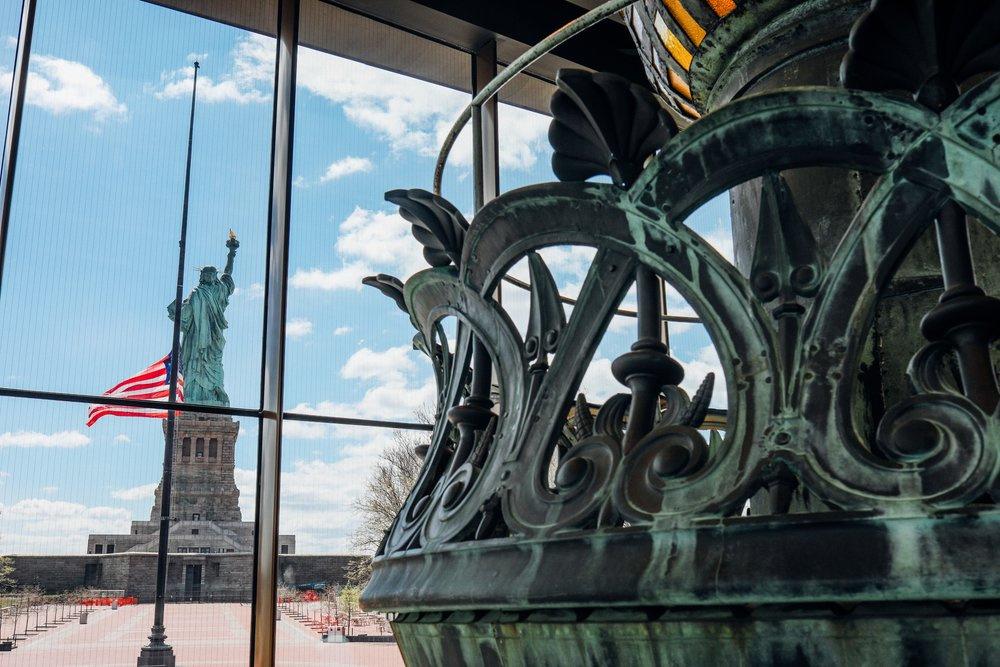

The statue has an iron infrastructure and a copper exterior, which has turned green over time due to oxidation.
Visit Statue of Liberty Grounds and Ellis Island with CityPASS®
CityPASS® tickets offer multiple great ways to see Statue of Liberty Grounds and Ellis Island. No matter which you choose, you'll save.





Advice for Visitors
Tips
Your reservation time is for your entry into the security facility, not your ferry departure time. You may enter the security facility line 30 minutes prior to your reservation time; we advise arriving up to an hour prior to your reservation time. Due to airport-level security, guests can expect to wait in lines of up to two hours at the Battery Park departure point. Alternatively, the Liberty State Park departure generally has shorter security/wait times.
Avoid longer wait times by arriving at Battery Park before 10am or boarding from Liberty State Park in New Jersey. Please note: The Liberty State Park departure point closes during the winter season, generally early January through early March. The Battery Park Departure point stays open all year.
Allow at least three hours to explore both islands. Reservation times at 2pm or later will not give you enough time to visit Ellis Island.
Complimentary audio tour headsets can be picked up and dropped off at Liberty and Ellis islands. The tour is available in 12 languages: Arabic, English, French, German, Hindi, Italian, Japanese, Korean, Mandarin, Portuguese, Russian and Spanish.
Minors (17 and under) must be accompanied by an adult 25 or older to board the ferry.
Statue City Cruises ferries cannot accommodate luggage; please find storage for your luggage prior to your departure.
Crown Access: Crown access is not included and is only available directly from Statue City Cruises by advance reservation; book Crown Access online or call (877) 523-9849 for more information. Crown tickets often sell out months in advance. The climb to the crown is strenuous, with 393 steps from the main lobby to the crown with no air conditioning. There is a maximum of four tickets per Crown Reserve transaction. Visitors must be at least 4 feet (1.2 meters) tall to visit the crown.
Pedestal Access: Pedestal access is not included and is only available directly from Statue City Cruises by advance reservation; book Pedestal Access online or call (877) 523-9849 for more information.
Learn more on the CityPASS Blog about what you'll experience with Statue City Cruises and details on getting to the ferry.
Attraction Features
Amenities
Dining: Snack are available for purchase on the boats. Both islands have cafes and several snack bars. You may bring a picnic lunch, but large coolers are not allowed through security; food and beverages are not allowed in the Statue of Liberty.
Shopping: Souvenirs are available for purchase at the onboard snack bars and in gift shops on both islands.
Accessibility
The boats and all facilities accommodate wheelchairs. Visit Statue City Cruise’s website for more information on services for guests with specific needs.
Parking/Transportation
Get directions and information on public transportation.
Contact Information & Hours
- Battery Park (departure point)
- Battery Park
- New York, NY 10004
- GPS Address: 1 Battery Place, New York, NY 10004
The Battery Park ticket office is located inside the Castle Clinton National Monument.
- (877) 523-9849
- statuecitycruises.com
Ticket office closes 30 minutes before last departure.
Check the daily ferry schedule and plan to depart before 2pm to have enough time to visit both islands.
Closed: Thanksgiving (fourth Thursday of November) and Christmas Day (Dec. 25)
- Liberty State Park (departure point)
- Liberty State Park
- Jersey City, NJ 07305
- GPS Address: 1 Audrey Zapp Dr., Jersey City, NJ 07305
The Liberty State Park ticket office is located inside the Central Railroad of New Jersey. Please note: This departure location closes in winter, generally early January through early March.
- (877) 523-9849
- statuecitycruises.com/tickets
Ticket office closes 30 minutes before last departure.
Check the daily ferry schedule and plan to depart before 2pm to have enough time to visit both islands.
Closed: Thanksgiving (fourth Thursday of November) and Christmas Day (Dec. 25)
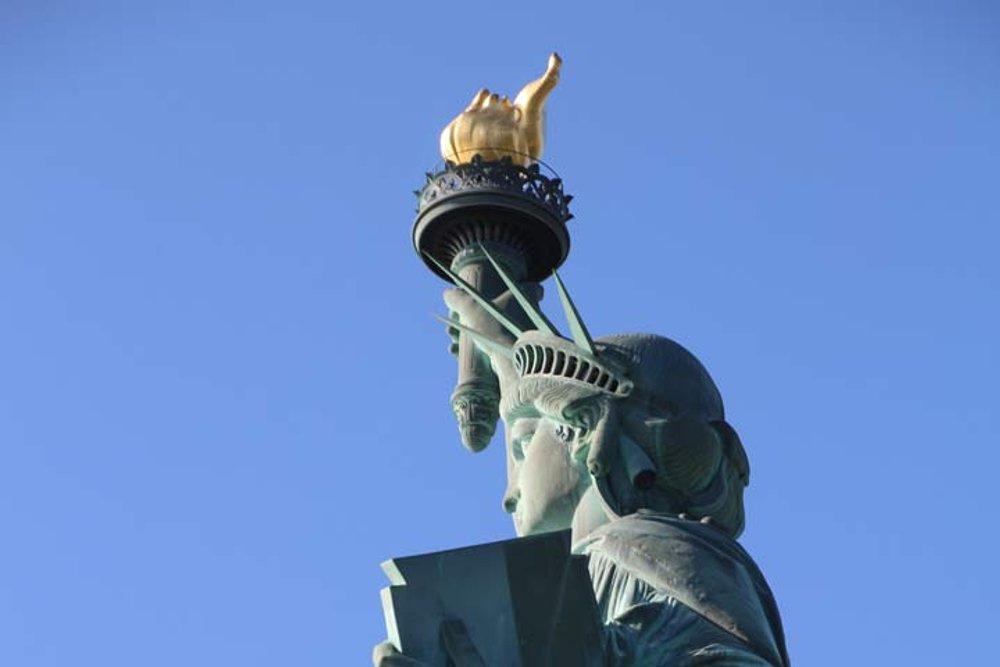
The torch that the Statue of Liberty holds in her right hand symbolizes enlightenment. The statue’s official name is Liberty ‘Enlightening the World’.
Read reviews from CityPASS® travelers.
See the finest attractions in New York City.
Get inspired. #citypass
Plan your visit.
The My CityPASS® app has all of the details you need for a great experience, including reservation and entry information, attraction details, maps, and extra offers and discounts from our partners.
All images courtesy of Statue City Cruises